People Don’t Really Talk About “Tactical Gear”
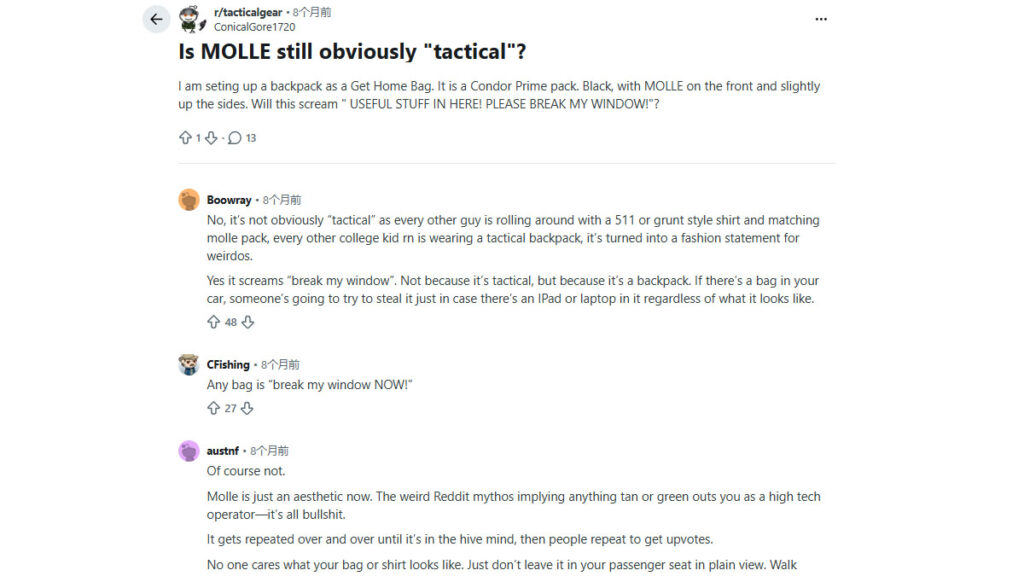
Most people don’t wake up and say they need tactical gear. In reality, they describe their needs in a much simpler way, like “I just need something to carry my stuff”, or “it looks good but it’s too heavy for daily use”. If you spend time on Reddit communities such as r/tacticalgear, you’ll notice the same pattern again and again: users rarely talk about “tactical products” as a category, they talk about how it feels to actually use them.
“It Looks Good, But I Stopped Using It”
One of the most common reactions is very simple: “it looks good, but I stopped using it after a while”. People often say things like it looks great but isn’t practical, the quality is fine but it feels too heavy, or they used it for a week and then switched back. This is not a quality issue in most cases. It’s a daily usability issue. The product looks right at first glance, but it doesn’t fit real routines.
Market reality is not about “features”
If you look at the tactical backpack market, for example, the pricing range alone shows how different the positioning can be. Entry-level products are usually around $25–$50, mid-range sits around $50–$100, and brand-level products can go beyond $100. Same category, completely different outcomes. The difference is not about features, but about whether the product actually matches real usage scenarios.
What Real Users Actually Say About Tactical Gear
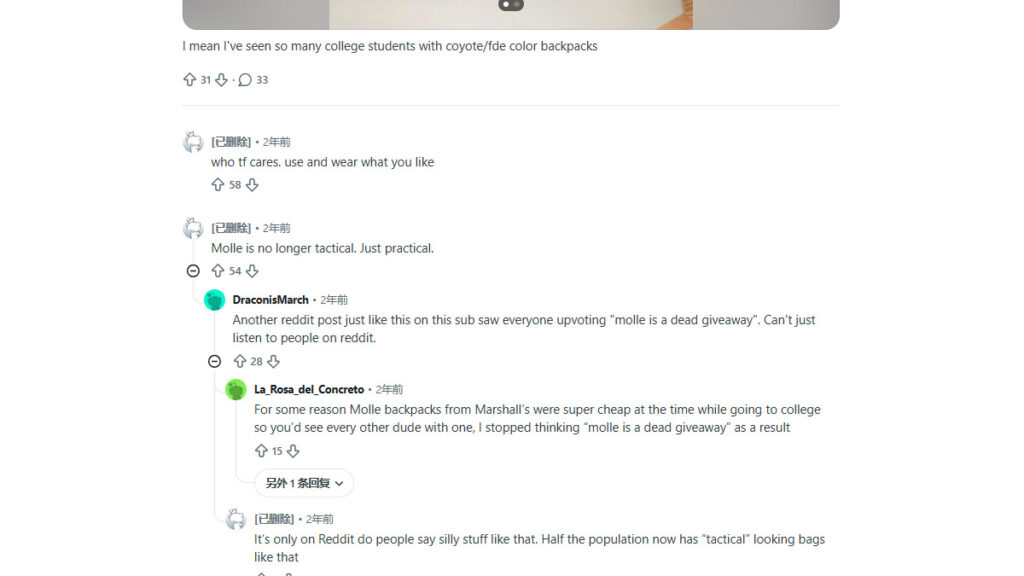
When you dig deeper into real user comments, a few patterns repeat very clearly. Some users say they just need more space, but later admit that even if it fits everything, the organization doesn’t work well. Others want something for daily use, but eventually feel it is too heavy for everyday carry. Training users are even more direct; if the product moves during running or feels unstable, it is immediately rejected. Modular users often say it looks flexible, but in reality they only use a small part of the system, especially with MOLLE setups that look useful but are not fully utilized in real life.
The Real Problem Is Mismatch, Not Product Quality
When you put all of these comments together, one thing becomes very clear: users are not rejecting tactical gear itself, they are rejecting the mismatch between design and real-world use. Most products are designed around features and appearance, but users are thinking about comfort, simplicity, and daily behavior.
Why This Matters From a Factory Perspective
From a factory side, this is where things become important. If you are building a brand or selling tactical gear, this is usually the part that matters most. End users don’t describe products in technical terms. They describe experience. And that gap — between how products are designed and how they are actually used — is where most products succeed or fail.
FAQ
How to start a tactical gear brand step by step?
Start with a clear market, test one product, validate demand, then scale.
Is tactical gear a profitable business?
It can be profitable, especially in growing segments like outdoor and fitness.
Who buys tactical gear?
Mainly everyday users, outdoor users, and gear enthusiasts.
What products should new brands start with?
Simple, functional products like vests, bags, or belts.