What happens when a brand identifies a market opportunity but doesn’t yet have a finished product design?
For one US client, the answer was to work with HUASHENG to develop an original sling bag from the concept stage.
The client had spent two to three years observing the CCW bag market. He understood the audience he wanted to reach, but when our collaboration began, he had no finalized product drawings or technical specifications.
This custom sling bag ODM development project began with a market opportunity rather than a finished technical design.
Through market research, original design proposals, client feedback, and physical sampling, we worked together to turn that early concept into a product the client could evaluate.
This is the story of how the project developed—and what it taught us about building a new product with an ODM manufacturing partner.

Project Overview
| Project Detail | Description |
|---|---|
| Client Market | United States |
| Product Category | CCW-oriented sling bag |
| Development Type | Original ODM product development |
| Starting Point | Market concept without a finalized product design |
| Design Direction | Urban appearance for men and women, combining everyday use with specialized carrying requirements |
| HUASHENG’s Role | Market and product research, original design proposals, revisions, and physical sampling |
| Design Process | Multiple rounds of design discussion and refinement |
| Initial Outcome | The client was satisfied with the first completed physical sample |
This case study is based on a first-hand account shared by a HUASHENG project representative on October 29, 2026. The client’s identity is not disclosed.
What Did HUASHENG Contribute to This ODM Project?
HUASHENG supported the project from early market and product research through original design proposals, client feedback, design refinement, and physical sampling.
The client began with a product concept rather than a finalized technical specification. Our design team helped translate his market expectations into several design directions, then refined the selected approach through discussion before sampling.
The result was a physical product sample that reflected the direction developed by both sides.
This collaboration illustrates the difference between producing an already-defined bag and participating in the development of a new product from its initial concept.
1. The Starting Point: A Market Opportunity, Not a Finished Design
The relationship began through a mutual introduction.
Before meeting HUASHENG, the client had spent several years studying a particular market segment in the United States.
He believed there was an opportunity to introduce a new product, but he had not previously developed a bag in this category.
During our first conversations, he explained his target audience, market observations, and the direction he hoped to pursue.
He did not arrive with a complete tech pack or approved product drawings.
Instead, he had a commercial idea and a general vision of the product he wanted to create.
That distinction shaped the development process.
Rather than selecting an existing model and changing its appearance, our team needed to help turn the client’s understanding of the market into a new product concept.
2. Defining the Product: Urban Style Meets Functional Requirements
One of the client’s priorities was the appearance of the finished bag.
He wanted an urban, everyday style rather than a product that looked exclusively tactical.
The bag was intended to appeal to both men and women, fit naturally into daily activities, and accommodate the specialized carrying requirements of its target market.
This created an important design consideration.
The appearance, construction, materials, and intended functions needed to work together.
The client valued HUASHENG’s experience in tactical-style bag manufacturing, product construction, and design support.
However, the goal was not to reproduce an existing tactical bag.
It was to develop a sling bag with its own product identity.
Before preparing a physical sample, we first needed to establish a clearer understanding of what that product should be.
3. Turning Market Research Into Original Design Concepts
Our design team began by researching existing brands and products in the relevant market.
We reviewed their design approaches, functional characteristics, selling points, and potential limitations.
At the same time, the client continued sharing his understanding of the US market and the customers he wanted to serve.
These discussions brought together two different perspectives: the client’s market knowledge and HUASHENG’s experience in product design and manufacturing.
Based on this shared understanding, our designers developed several original concepts for review.
However, the first proposals did not fully meet the client’s expectations.
That feedback became an important part of the development process.
4. When the First Designs Didn’t Work, We Refined the Direction
After reviewing the initial designs, the client felt that certain details did not fully reflect his vision.
Some functional interpretations, structural elements, and color choices needed further refinement.
This also showed our team that we needed a deeper understanding of the intended users and the client’s design preferences.
Instead of moving directly into physical sampling, we continued the design discussion.
The client provided additional references and suggestions. Our designers reviewed the feedback and revised the concepts.
Through several rounds of discussion and refinement, the product’s overall structure, color direction, target audience, and branding elements gradually became clearer.
By the third design stage, the client was satisfied with the direction and selected a concept for sampling.
The important result was not simply an approved drawing.
Both sides had developed a clearer understanding of what the finished product was supposed to be.
Development insight: In original ODM projects, refining the product concept before sampling can be just as important as making the physical sample itself.
5. From Approved Design to Physical Sling Bag Sample
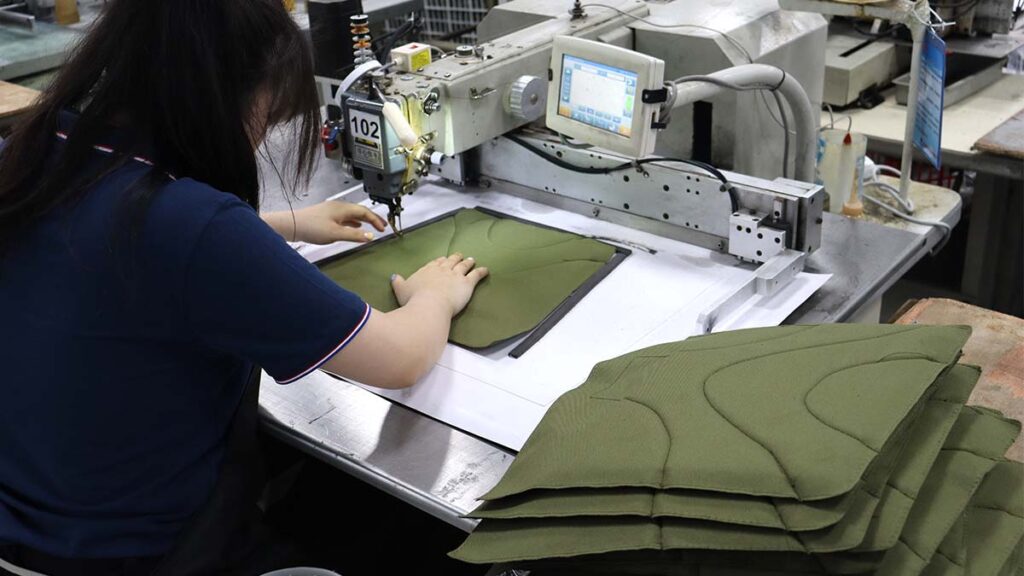
Once the design direction was agreed upon, the project moved into sampling.
Our team worked from the proposed dimensions, overall construction, material choices, and functional requirements.
The intended urban appearance remained a priority.
According to the project lead, the team considered zipper selection, fabric choices, panel construction, and how the bag would look when worn.
These decisions needed to support the overall product concept rather than being treated as unrelated details.
The team also reviewed how the product’s specialized functional requirements could be accommodated while maintaining the intended everyday appearance.
When these design elements came together in the first completed physical sample, the client was satisfied with the result.
For our project representative, this was a particularly meaningful moment.
The positive response reflected not only the work completed during sampling, but also the earlier discussions about the target market, intended users, product positioning, and design decisions.
6. Why the Work Before Sampling Mattered
It can be tempting to measure product development only by how quickly a factory produces its first sample.
This project offered a different lesson.
The initial design proposals had not fully met the client’s expectations. Additional communication was necessary to define the product more clearly.
By the time sampling began, both sides had discussed several important questions:
-
Who was the product intended for?
-
How should it look and feel in everyday use?
-
Which design direction best suited the target market?
-
How should its structure and materials support the intended product concept?
-
Which design should move forward into physical development?
The client’s positive response to the first completed sample cannot be attributed to a single material or component.
The project lead regarded the earlier collaboration and repeated design discussions as central to the outcome.
This illustrates an important distinction between manufacturing an already-defined product and working with a client on original ODM product development.
7. From One Product to Continued Development
The relationship did not end with the initial sample.
According to the project lead, the collaboration continued into the development of additional bag models over approximately the following year.
The first project had helped establish a shared approach to design communication and a better understanding of the client’s product direction.
This created a foundation for discussing other designs, materials, and product concepts.
For HUASHENG, the significance of the collaboration was not simply completing one sample.
It was the opportunity to build on the product development experience gained during the first project.
What This ODM Project Taught Us
Understand the Market Before Finalizing the Product
A new product cannot be defined only by its appearance or technical components.
Its intended users and market positioning influence the decisions made throughout development.
Treat Client Feedback as Part of the Design Process
The early concepts were not immediately approved, but that did not prevent the project from moving forward.
Further discussion helped clarify expectations and improve the design direction.
Build Agreement Before Physical Sampling
In this project, the client accepted the first completed physical sample after multiple rounds of design refinement.
The experience demonstrates the value of resolving major conceptual questions before moving into sampling.
Think Beyond the First Product
An effective development relationship may create opportunities to explore additional products over time.
However, each new project still requires its own design decisions, technical review, and commercial evaluation.

Frequently Asked Questions
Can ODM development begin without a complete tech pack?
An initial development discussion can begin with a product concept and a description of the intended market.
In this case, the client started with a market opportunity and design direction rather than finalized technical specifications.
The details required for sampling and production still needed to be developed and confirmed.
What information did the client provide before design began?
The client shared his target market, intended audience, preferred urban style, functional expectations, and examples of products and brands in the market.
These inputs helped our design team understand the intended product direction.
Why were multiple design revisions necessary?
The initial proposals did not fully match the client’s expectations for certain functional, structural, and color details.
The revisions helped both sides establish a clearer understanding before sampling.
Was the first physical sample approved immediately?
According to the project lead, the client was satisfied with the first completed physical sample.
The account does not provide a complete technical inspection record or detailed documentation of subsequent production approvals.
How is original ODM development different from private labeling?
Private labeling typically begins with an existing product that receives a brand’s identity.
This project began without a finalized product design and involved original concepts, multiple design proposals, client feedback, and physical sampling.
The difference lies in the scope of product development, not simply whether a logo is added.
For a broader explanation of different customization levels, read our Tactical Backpack Customization Guide.
Have a New Bag Concept in Mind?
A new product does not always begin with a complete set of technical drawings.
Sometimes, it starts with a market opportunity, an intended customer group, and an idea worth exploring.
If you are planning an original sling bag, tactical backpack, or another custom carry product, HUASHENG can discuss your concept and development requirements with you.
Share your intended market, product idea, reference images if available, and the features you already have in mind.
Our team can help review the design direction, identify details that require further development, and discuss the next steps toward a workable product concept.
Discuss Your Original ODM Project
You can also explore HUASHENG’s OEM/ODM customization services.
A complete tech pack is not required for the initial discussion. Project feasibility, development scope, sampling requirements, and commercial conditions are assessed individually.